

What Is Logistics? Meaning in Business, Types & Examples
Logistics is one of the largest industries in the world and the backbone of the global economy. It covers a wide range of sub-areas and processes that keep goods moving - from raw materials all the way to your front door.
This guide explains, in plain language, what logistics actually means, where the term comes from, why it matters for businesses, and how the different types of logistics work together - with clear, real-world examples.
A simple definition: what is logistics?
- Logistics means "supply" or "replenishment". At its core, it is the planning, organisation and control of the flow of goods, making sure the right products reach the right place, at the right time, in the right quantity and condition.
In a broader sense, logistics also covers the movement of people and information. In this article we focus on goods logistics for businesses, which is exactly our speciality at Quivo.
- The word traces back to the Greek logistikē, the art of calculating and reasoning. That fits rather well, because getting every required good to the right place at the right moment is a constant, complex balancing act, and it keeps the global economy alive.
Wherever you are right now, whether at home, in the office or on the move, take a look around. Everything you can see was manufactured somewhere and delivered to where it is now. The chair you sit on, the phone you are reading this on, even the train you might be riding. Countless logistics companies moved the materials to the producer, and the finished goods on to you.
Without functioning logistics processes:
- Supermarket shelves would stay empty, because food has to be restocked constantly.
- No parcels would arrive from online shops if there were no items in stock.
- There would be no fuel at the pump, because the tanker never shows up.
- Products could not be made, because components are missing, from laptops and vehicles to furniture, medicines and building materials.
To keep all of this running, logistics processes around the world ensure a constant, reliable supply.
Logistics companies: types and differences
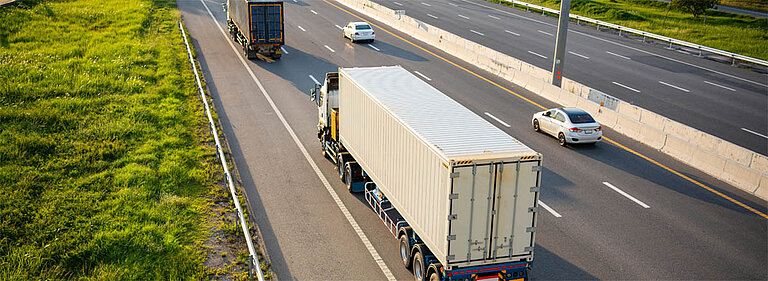
Logistics is one of the largest industries on the planet. Estimates put the global logistics market at roughly 9 to 10 trillion dollars, and more than 14 million people work in the sector worldwide.
All of these employees work along the full logistics process, also known as the supply chain. More on that below.
These companies are part of logistics:
- Transport companies and freight forwarders move raw materials and goods, mainly over land by truck and by air, but also by sea. Some of the largest freight forwarders in the world are Kuehne+Nagel, DHL, DB Schenker, DSV and Nippon Express.
- Shipping lines transport goods overseas in huge container vessels. Well-known carriers include MSC, Maersk, CMA CGM, COSCO and Hapag-Lloyd.
- Parcel and delivery services bring packages from online shops to customers. Many also take on forwarding tasks. DHL, GLS, UPS, FedEx and Royal Mail are just a few examples.
- Fulfilment providers like Quivo, which handle the entire logistics operation for e-commerce shops.
- Warehouses that store goods, often owned or rented by the largest forwarders and logistics groups such as DHL Group, DB Schenker, Maersk, FedEx and UPS.
- Packaging companies that pre-package goods in large quantities.
The types of logistics explained
Business logistics has several sub-areas, and together they make sure goods get from A to B smoothly:
- Procurement logistics ensures the right parts and materials are available for production exactly when they are needed. If a company builds smartphones, every component has to arrive on time so production never stalls.
- Production logistics keeps things running like clockwork inside the factory. It optimises production processes, coordinates materials, machines and labour, and avoids bottlenecks so goods are made in the right quantity and quality.
- Distribution logistics makes sure finished products reach customers. When you finally hold your new smartphone, distribution logistics did its job.
- Warehouse logistics handles the correct storage of goods, and it matters more and more as people order online. When you buy something in an online shop, it has to be stored somewhere before it ships. Warehouse logistics keeps order in the chaos, so every item has its place, is easy to find, and orders go out fast. This is exactly what we do, and it is called fulfilment.
- Transport logistics is about moving goods from one place to another, whether by truck, train, plane or ship, safely and as quickly as possible. We also offer this for businesses through our own transport department.
- Disposal (reverse) logistics may sound less glamorous, but it is hugely important. It handles what happens when goods are no longer needed, namely the environmentally responsible disposal or recycling of materials and products.
And that covers every sub-area of logistics, from transport and storage to procurement, production, distribution and disposal. It is a genuinely multifaceted field that quietly shapes our everyday lives.
None of this works by itself, of course. Logistics relies on technology such as GPS tracking and warehouse automation to coordinate everything, and on the many people working across these sub-areas who make it all possible.
![[Translate to EN:] logistics branches](/fileadmin/_processed_/9/c/csm_Logistik_outsourcen_article_02072a0862.jpg)
Why logistics matters for businesses
For any company that sells physical products, logistics is not a back-office detail. It is a competitive advantage. Efficient logistics means:
- Lower costs through optimised storage, routing and inventory.
- Faster delivery, which directly shapes customer satisfaction and repeat purchases.
- Reliability, so products from any industry, be it technology, fashion, beauty or food, reach customers on time.
- Scalability, so a business can grow into new markets without its operations breaking.
This is especially true in e-commerce, where customers expect fast, accurate and trackable delivery as standard. Logistics is no longer just about moving goods. It is the lifeline that keeps commerce flowing, both at home and across borders.
What is a supply chain?
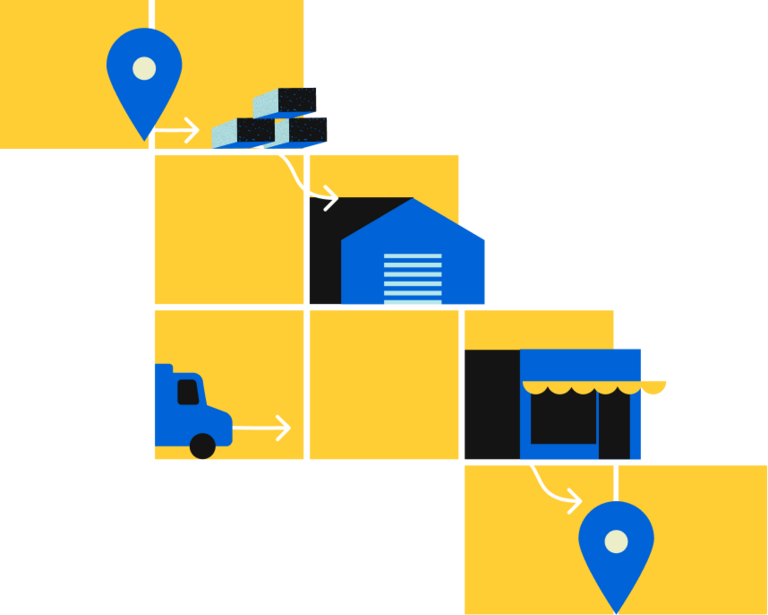
A supply chain is an interlocking network that ensures a constant flow of goods. It is made up of several stages:
- Procurement (raw materials and goods)
- Supply (to the producer)
- Production (manufacturer)
- Distribution (warehousing, forwarding)
- Retail (physical stores and online shops)
- Customers (delivery services)
- Disposal & recycling (logistics companies)
What does "just in time" mean?
The precise, ongoing coordination of every step in a supply chain matters enormously. It lets businesses use resources wisely and work economically.
This approach is called "just in time", which means goods are delivered exactly when they are needed and no sooner. Efficiency comes first, and no single stage gets overloaded. Manufacturers get just enough material to process, and shops are supplied with the right quantities, without having to throw away unsold perishables, for example.
The trade-off is fragility, because when one link breaks, the whole chain can stall. After the supply chain disruptions of recent years, many businesses now combine just in time with a "just in case" approach, holding strategic safety stock so they stay resilient when something goes wrong.
A practical example: the smartphone supply chain
You need a new phone, so you search online, find your model in stock, and order it in one click. But what had to happen for that to work? Here is roughly what the supply chain looks like:
- Transport companies and forwarders regularly bring agreed quantities of raw materials from suppliers to the producers of individual phone parts.
- Those suppliers then deliver finished components at precisely timed intervals, either to other suppliers or straight to the factory of the major phone brand. The manufacturer relies on a steady flow of specific quantities so production never stops, and any stall means major losses of time and money.
- Retailers worldwide have contracts with the phone brands and expect deliveries at exact times. If their virtual "shelves" are not stocked, sales suffer and customers leave. To prevent that, large quantities of goods, often from Asia, are shipped to the warehouses of sellers, online shops or fulfilment providers like Quivo.

- This is where you come in and order your new phone.
- Your order lands at the fulfilment warehouse, where your phone is immediately picked, packed and handed to a delivery service.
- The delivery service brings it to your doorstep.
- And your old, broken phone? You take it to a recycling point, where old devices are collected and partly recycled. Here too, logistics handles the transport to recycling and disposal sites.
If you have any questions about logistics, or need support with yours, we are happy to help. Just get in touch and we will take care of it.
Related reading:
- What Is Amazon FBA? Costs, Benefits and Alternatives for 2026
- Amazon Peak Season 2026: The Most Important Days in E-Commerce
- Euro Pallets: Dimensions, Standards and Differences Explained
- Fulfilment Returns: How to Manage Returns Professionally
Sources
largest transport companies in the world
www.capital.de
statistics and market volume of the logistics market
en.statista.com
Image sources:
Quivo © 2026, Canva
Insights into the future of scalable e-commerce logistics
ARTICLES
ARTICLES
Insights into the future of scalable e-commerce logistics

Ready to scale up?
The full logistics operations.
Let’s work together.