

What Is a Fulfillment Center in the US? The Definition, Tasks and Costs at a Glance
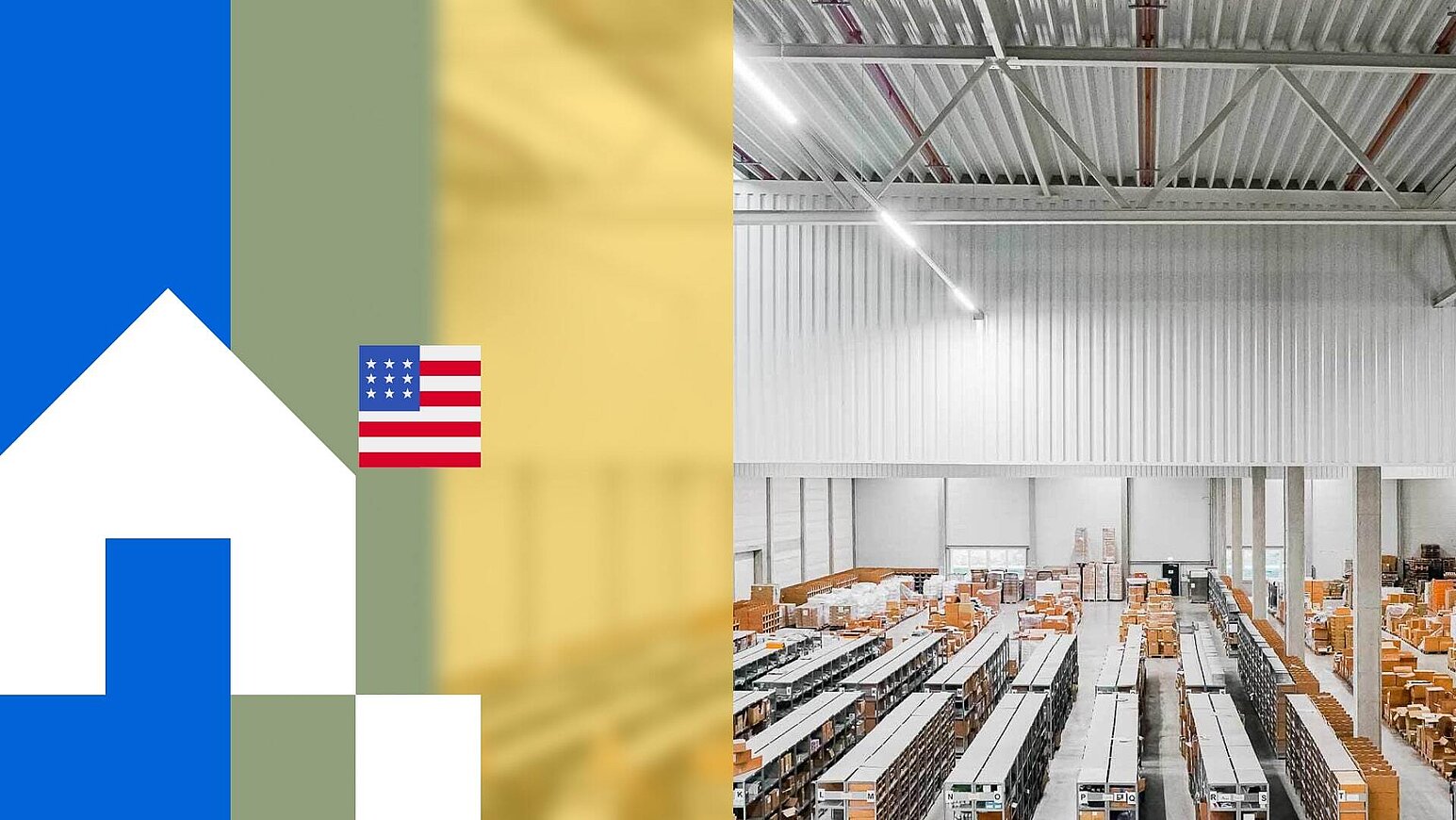
E-commerce continues to grow at pace, and fulfillment centers play a vital role in supporting this expansion. They ensure that storage, packing and shipping processes run efficiently and reliably. But what distinguishes a fulfillment center from a traditional warehouse? How does the process work in practice, and what costs should businesses plan for?
In this article, you will find a clear and comprehensive overview of fulfillment centers in the US, covering the fundamentals as well as the key differences that are important for growing online retailers!
- What is a fulfillment center?
- The core responsibilities of a fulfillment center
- The differences between afulfillment center and a traditional warehouse
- The advantages and disadvantages of afulfillment center
- Choosing the right fulfillment center in the US
- How large should a fulfillment center be?
- How much does a fulfillment center cost in the US?
- Conclusion: Is a fulfillment center worth it?
What is a fulfillment center?
Put simply, a fulfillment center manages the entire logistics operation for online retailers, ensuring that thousands of parcels are packed and dispatched quickly and securely every day. It covers everything from order receipt to final delivery.
In practice, a fulfillment center is far more than just a storage facility. It is a dynamic logistics hub that takes care of the complete order fulfillment process for e-commerce businesses. Rather than simply storing goods, there is constant movement, from the automatic capture of customer orders via online shop API integrations through to careful picking, packing and handover to national and international carriers.
All relevant information, including stock updates and tracking numbers, is transmitted in real time to both the retailer and their customers. Fulfillment centers can also offer tailored solutions such as branded packaging, customised inserts or promotional materials to enhance the overall customer experience. These value added services give retailers greater flexibility in their branding and help strengthen customer loyalty.
Thanks to streamlined processes and operational expertise, fulfillment center simplify shipping and support scalable growth for businesses across the US and beyond.
- Pro tip: Fulfillment providers like Quivo operate their own dedicated fulfillment centers rather than relying solely on subcontracted warehouse space. This allows for consistent service quality across different countries. Quivo operates eight large fulfillment locations worldwide, forming the backbone of its global logistics network.
The core responsibilities of a fulfillment center
- Storage: Your products are delivered to the fulfillment center, where they are received, checked and professionally stored under suitable conditions.
- Integration: Orders from connected online shops are automatically transmitted to the fulfillment center via system integrations and processed without manual intervention.
- Picking and packing: Fulfillment center staff pick the ordered items from storage, assemble them accurately and prepare them securely for dispatch.
- Shipping: The completed and labelled parcels are consolidated and handed over to trusted carriers operating across the US and internationally.
- Returns management: Returned items are inspected, recorded and either restocked or processed further in line with the retailer’s instructions and return policy.
- All-in-one fulfilment providers such as Quivo, with their own in-house transport operations, can also manage pallet transport for businesses if required. This may include moving goods from the production site to the end customer or directly to the fulfillment center.
The difference between a fulfillment center and a warehouse
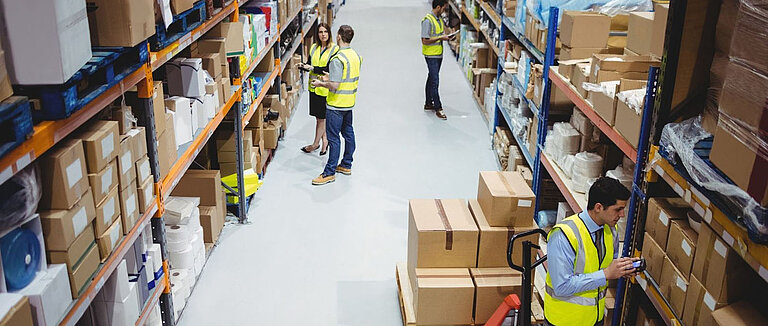
Fulfillment centers act as flexible, fast-moving hubs where goods flow in and out quickly. Their primary purpose is to process customer orders from online retailers as efficiently as possible.
They are not designed for long-term storage. In fact, the shorter products remain in a fulfillment center, the better, as extended storage ties up valuable space and increases costs. In addition to storage, fulfillment centers handle a wide range of operational processes that do not typically take place in a standard warehouse, such as picking, packing, dispatch and returns management.
- A traditional warehouse, by contrast, is generally more static and focused on the longer-term storage of goods. Its core activities are limited to receiving, storing and dispatching stock. In many cases, warehouses also serve as buffer storage facilities that supply fulfillment centers.
Other types of warehouse, not to be confused with a fulfillment center:
- Distribution centre: These facilities focus on the rapid distribution of goods, similar to fulfillment centers. The key difference is that fulfillment centers provide a broader service scope, including storage, order processing, packaging and returns handling for e-commerce retailers.
- Pallet warehouse: Pallet warehouses are designed for storing bulk or oversized goods on pallets. Fulfillment centers, on the other hand, typically manage smaller, fast-moving items and actively process individual customer orders rather than simply storing stock.
- Small parts warehouse: These facilities specialise in storing small items and components. While fulfillment center may offer similar storage capabilities, they also provide full order fulfillment services, including picking, packing and shipping directly to end customers.
The most common logistics challenges for online retailers ...
... and how fulfillment centers can help
- Scalability: As your online shop grows, order volumes increase and operational pressure rises. Parcels start piling up, and customers expect fast, reliable delivery. Meeting these expectations consistently becomes more demanding as you scale.
- Rising logistics costs: Expanding operations often means leasing additional warehouse space and hiring staff dedicated to picking and shipping. This brings added costs such as salaries, insurance, compliance requirements and operational overheads.
- Operational resources: Managing packaging materials, coordinating carrier collections and handling returns can quickly become time consuming and expensive. Without efficient systems in place, logistics can absorb significant internal resources.
- Limited time for growth: As day to day fulfillment tasks take over, there is less time to focus on product development, marketing channels and strategic planning. Growth can stall when operational workload dominates leadership attention.
- Warehouse capacity: Available storage space may become limited, making it harder to manage stock efficiently. This can lead to bottlenecks, stock imbalances and increased storage costs.
- Returns management: As order volumes increase, so do returns. Managing them efficiently, especially during peak trading periods, can become a major operational challenge.
- Lack of transparency: Without robust systems, it becomes difficult to maintain clear oversight of orders, inventory levels and shipping statuses. This can result in delays, errors and unnecessary costs.
- Competitive pressure: Customer expectations around fast delivery and competitive pricing continue to rise. Smaller retailers in particular may struggle to keep pace with larger competitors without professional logistics support.

The advantages and disadvantages of a fulfillment center
Fulfillment providers, with their operational expertise and established processes, act as strategic partners for businesses. Many dispatch thousands of parcels every day, giving them the experience and infrastructure required to support growing online retailers.
Key advantages at a glance
- Reduces internal costs and frees up operational resources
- Ensures efficient stock organisation and professional storage
- Eliminates the need to search for and manage your own warehouse space
- Speeds up dispatch processes, enabling same day or next day delivery options
- Removes the need for in-house picking, packing and trips to the post office
- Secures competitive shipping rates through established carrier partnerships
- Can manage returns on your behalf
- Allows you to focus on core business areas such as marketing, product development and customer service
Efficiency and scalability
One of the most significant benefits is improved efficiency and scalability. A fulfillment center streamlines logistics operations so that orders are processed and dispatched quickly, improving customer satisfaction and strengthening your brand reputation.
Capacity can be adjusted in line with demand, whether during peak trading periods such as Christmas or quieter months. You do not need to worry about warehouse space, additional staff or operational bottlenecks, as the fulfilment infrastructure grows alongside your business.
Potential drawback: You have less direct control over day to day logistics processes, and service levels can vary between providers. Special requirements such as customised packaging may incur additional costs and depend on the provider’s flexibility.
Technology and automation
Fulfillment centers often provide access to advanced systems, automation and warehouse management technology that would be expensive for small or medium sized businesses to implement independently. This allows you to benefit from innovative logistics solutions without investing in costly infrastructure.
Reduced operational workload
A fulfillment center automates and manages many time intensive tasks. Orders are transmitted automatically, recorded in the warehouse management system and dispatched efficiently. The provider typically handles:
- Inventory management
- Negotiation of competitive shipping rates
- Picking, packing and labelling
- Coordination with carriers and customs where required
- Returns processing and product grading
Some providers, such as Quivo, also offer additional B2B transport services.
Potential drawback: For bulky or heavy products, fulfillment costs and handling requirements may be higher. Returns management can also require closer coordination, particularly for complex or high value items.
Costs and long term value
Time is money. By outsourcing logistics to a fulfillment center, you not only save time but also gain the freedom to focus on growth, marketing and strategic decision making. At the same time, modern fulfillment providers offer clear reporting and system integration, giving you full visibility of stock levels and order statuses.
Thanks to scalable pricing models, costs can decrease as your order volumes increase. Many UK fulfillment providers offer volume based discounts that become more attractive as your business grows.
Potential drawback: For very low monthly order volumes, outsourcing may be more expensive than handling fulfillment in house. In many cases, working with a fulfillment center becomes cost effective only once a certain shipment threshold is reached, so careful cost analysis is essential.
Choosing the right fulfillment center
If you are looking for a fulfilment centre in the US, there are several key factors to consider:
- Start by assessing the geographic location of the facility in relation to your target markets. A strategically located fulfillment center within the US can help reduce delivery times and lower shipping costs, particularly if your customers are spread across different regions.
- You should also evaluate the provider’s experience and reputation. Look closely at the range of services offered, the level of technological integration, scalability options and the quality of customer support. A strong fulfillment partner should be able to adapt to your growth plans while maintaining consistent service standards.
Cost is another decisive factor. Compare pricing structures carefully and consider not only storage and picking fees but also any additional charges for value added services, customised packaging or special handling requirements.
Providers such as Quivo have built their reputation by combining scalable infrastructure, advanced technology and dedicated support, making them a trusted fulfillment partner for growing direct to consumer brands across Europe.

How large should a fulfillment center be?
The required size of a fulfillment center depends largely on your order volume and inventory levels. An experienced fulfillment provider will assess your business needs carefully and allocate storage space strategically within its network to ensure efficient operations.
- For smaller businesses with limited stock, a facility with around 500 to 1,000 square metres may be sufficient.
- Larger retailers with a broader product range and higher order volumes often require 5,000 square metres or more. What matters most is having enough capacity to store inventory efficiently while ensuring smooth picking and dispatch processes.
- Future growth and seasonal fluctuations should also be taken into account. During peak periods, such as Black Friday or the Christmas season, order volumes can increase significantly.
A consultation with a fulfillment provider will help you determine the right capacity and setup for your specific business requirements in the US market.
What is better: one fulfillment center or multiple locations?
Deciding whether to operate from a single fulfillment center in the US or to use multiple locations across Europe or globally depends on several strategic factors:
- A single, central fulfillment center often allows for cost efficiencies through economies of scale and simpler inventory management. Stock is consolidated in one location, making forecasting and control more straightforward. However, delivery times may be longer if your customers are spread across Europe or international markets.
- Multiple fulfillment locations can significantly reduce delivery times and shipping costs, as products are stored closer to end customers. This approach can be particularly beneficial if you sell into large markets such as Germany, France or the United Kingdom. That said, managing stock across several sites requires precise inventory planning, strong system integration and clear operational coordination to avoid stock imbalances.
Ultimately, the decision between one central fulfillment center and a multi location strategy depends on your business model, customer expectations and available budget.
If your primary customer base is in the US, a domesticfulfillment center is usually the most efficient solution for fast and cost effective delivery. If you sell widely across Europe, a broader fulfillment network may be worth considering to stay competitive and meet delivery expectations in each market.
How much do fulfillment center cost in the US?
If you manage logistics in house, there are numerous costs and responsibilities that are often underestimated. Even without factoring in the time and management effort involved, typical expenses include:
- Warehouse rent
- Warehouse management software
- Salaries for warehouse staff
- Equipment, vehicles and insurance
- Packaging materials and cartons
Postage and carrier charges
When working with a fulfillment provider, pricing structures vary depending on the services required. In most cases, costs are based on the operational effort involved in picking and dispatching each order. In addition, there are storage fees, potential setup costs and charges for value added services such as branded packaging, custom inserts or premium packing solutions.
- Using this example, you can clearly and completely transparently see how fulfillment prices are structured in our case.
How do Amazon’s fulfillment center differ?
Amazon fulfillment centers differ from other fulfillment center due to their close integration into the Amazon ecosystem. These centres are specifically designed to process orders placed on Amazon and offer seamless integration into the large sales and shipping platform.
- However, this does not mean that an external fulfillment provider cannot take over your logistics. Amazon provides dedicated interfaces for exactly this purpose. This operates under the Fulfillment by Merchant programme.
A key difference is that Amazon, with its own fulfillment center, offers an accessible and comprehensive sales and logistics solution that does not need to be outsourced or externally connected. In addition to the sales platform, Amazon also handles the storage, packaging and shipping of products as part of its fulfilment service. This makes it easier for retailers to sell their products via e-commerce.
- You can find all the advantages and disadvantages of Fulfillment by Amazon in our detailed article.
In contrast, independent fulfillment center are generally more flexible and offer customised solutions for various e-commerce businesses. They are not restricted to the Amazon ecosystem and can provide a wider range of services across different sales platforms.
As an omnichannel retailer, this allows you to distribute your products across multiple sales channels and increase your revenue.
- You can also find the advantages of omni-channel and multichannel fulfillment in e-commerce clearly summarised on our blog.
Conclusion: Is a fulfillment center worth it?
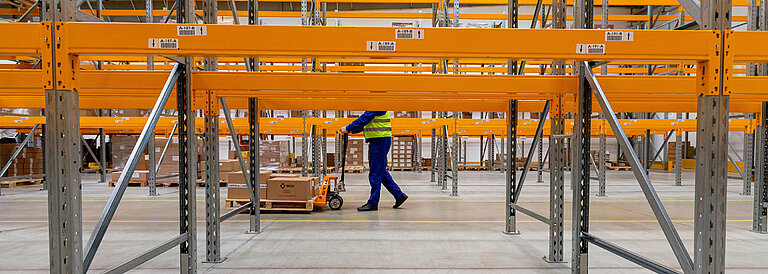
The fulfillment process is highly individual and depends on your products and shipping volumes. In most cases, outsourcing your logistics is worthwhile, as it saves significant time and effort while reducing operational pressure. As shipment volumes increase, logistics often become more cost efficient, since optimised processes reduce the average handling cost per parcel.
A simple rule of thumb is to calculate all logistics costs associated with in house fulfillment and compare them with the total service costs of a fulfillment provider. If the overall costs are similar, and you factor in your time and operational workload, partnering with a fulfillment center in the US is usually the more efficient and scalable option!
- With Quivo, you benefit from the quality of our own fulfilment locations. We offer competitive storage rates and a transparent pricing model where you only pay for the services you actually use. If you are looking for a reliable fulfillment center in the US, get in touch and we will develop a flexible solution tailored to your business needs.
Sources
What is a fulfilment centre and why is it important?
https://www.webhostingsecretrevealed.net
What does fulfilment centre actually mean?
https://simplexity.news
Amazon Services
amazon.com
Image sources:
Quivo © 2026, Pexels, Pixabay
Insights into the world of flexible fulfillment
ARTICLES
ARTICLES
Insights into the world of flexible fulfillment


Ready to grow?
With our scalable fulfillment solution.
Let’s work together