

Fulfillment Returns: How to Manage Returns Professionally and Use Them as an Opportunity

Returns are part of e-commerce just as much as the shopping basket itself. No online retailer can avoid dealing with returns in the long run. The real question isn't whether returns happen, but how well prepared you are for them. Because the difference between a chaotic returns process and a smooth fulfilment returns system is often the difference between a customer who comes back and one who never does.
In this article, you'll learn what goes into a professional returns process, which levers you can pull, and how Quivo helps you stop seeing returns as a cost factor and start treating them as a genuine competitive advantage.
What Are Fulfilment Returns?
Fulfilment returns are return shipments (usually parcels) that arrive at a fulfilment provider's warehouse and are processed there. The term also generally describes the complete handling of returns by an external logistics provider.
That covers everything from receiving the returned parcel to inspecting and classifying the goods, through to putting them back into stock or disposing of them. So it isn't an isolated step, but an integrated part of the entire fulfilment process.
Many retailers still treat shipping and returns as two separate worlds. Anyone who links the two areas together creates processes that are more stable, more predictable and far more pleasant for customers.
Why Returns Are Underestimated in E-Commerce
The numbers speak for themselves: in the fashion sector, the returns rate on major platforms is up to 50 per cent. Even in the direct-to-consumer space, where brands are closer to their customers, it can still be 20 to 30 per cent. With merchandise or supplements the rate is significantly lower, but returns still happen there too.
The problem: every poorly handled return costs you twice. Once through the capital tied up in goods you can no longer sell, and a second time through the customer who never comes back after a bad returns experience. Studies and practical experience consistently show the same picture: customers who can return things without hassle buy more often and spend more.
A well-thought-out fulfilment returns system flips this logic on its head. Instead of fearing returns, you use them as a touchpoint to build trust.
The Typical Returns Process: How It Works
A good returns process starts long before the parcel arrives back at the warehouse. The customer logs the return through an integrated returns portal, generates their own return label and ideally chooses straight away whether they want a refund, an exchange or a credit note. This self-service model not only takes significant pressure off customer service, it also speeds up processing on the warehouse side, because the return is already in the system before it physically arrives.
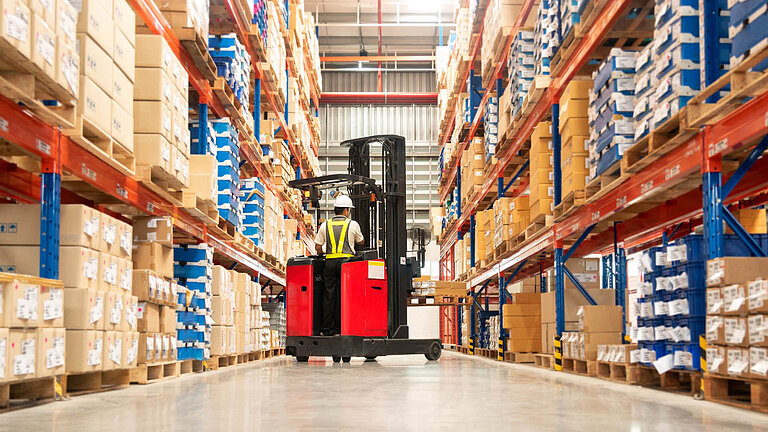
Once it reaches the warehouse, things follow a clear pattern:
- The parcel arrives and is immediately assigned to the correct order
- Every return is photographed and assessed
- The goods are classified using the ABC system
- A-grade goods go straight back into available stock
- B and C-grade goods are stored and reconditioned or disposed of at sensible intervals
- All information is visible in real time on the central logistics dashboard
The goal is processing within 48 hours of receipt. That means A-grade goods are quickly back on sale, capital isn't unnecessarily tied up, and you have a full overview of the status of every single return at any time.
What ABC Classification Means
ABC classification is one of the most important tools in professional returns management, because it allows clear decisions without every return having to be assessed manually.
A-grade goods are flawless and go straight back into stock with no extra effort. They are immediately ready to sell again and cause no additional costs.
B-grade goods have minor defects but can generally be reconditioned. They are first put into storage and can then be cleaned, repackaged or otherwise refurbished in a next step so they can go back on sale.
C-grade goods are damaged or no longer fit for sale. They are recorded separately and disposed of, donated or recycled according to your individual instructions. Here too, the decision stays with you.
Thanks to the photo documentation of every single return, which is standard with our fulfilment service, you have a clear, traceable basis for all further steps. No guesswork, no follow-up questions, no blind spots in the process! Especially when disputes arise with customers or shipping carriers, this documentation can be decisive.

The Benefits of Professional Returns Management
Outsourcing the returns process to a specialised logistics partner like Quivo brings concrete benefits that have a direct impact on your business:
- Time savings: instead of checking, classifying and storing returns yourself, your partner takes care of the entire process.
- Transparency: you see the status of every return live on the dashboard of your fulfilment software, including photos and assessment.
- Fast restocking: A-grade goods are available again within 48 hours and can be sold straight away.
- Scalability: whether you have 10 or 1,000 returns a week, the infrastructure grows with you.
- Customer satisfaction: a smooth returns process builds trust and increases the likelihood of repeat purchases.
- A data foundation: reasons for return are systematically recorded and can be used to improve products.

What You Can Do Yourself: Actively Reducing Returns
Building a professional returns process is one thing. Preventing returns in the first place is another, and both approaches belong together if you want to run a sustainably profitable business.
The most common reasons for returns in e-commerce are inaccurate size information, unclear or misleading product descriptions, and unmet expectations caused by poor product photos or overly promotional copy. On top of that come quality issues, delivery times that are too long, and a lack of communication during the shipping process. Anyone who tackles these points systematically can measurably reduce their returns rate without restricting customers or putting hurdles in the way of the purchase.
Specifically, the following measures help:
- Detailed and honest product descriptions that don't leave out any relevant information
- High-quality images from various angles, plus product videos where needed
- Size guides and material details for fashion and similar products
- Visible customer reviews to help shoppers make up their minds before buying
- Transparent delivery times, so customers don't order somewhere else out of impatience
- Proactive communication during shipping through status updates and tracking
Anyone who systematically evaluates their returns data will also spot patterns that can be used for range development. Which products get returned particularly often? For what reason? Is it sizing issues, quality problems or simply wrong expectations? This data isn't a nuisance, it's valuable feedback that helps you improve your range in a targeted way!
FREE E-BOOK
Proven Strategies for Reducing Your Shipping Costs and Avoiding Returns
Free vs Paid Returns: Which Strategy Is Right?
There are essentially two approaches, and which one suits you best depends heavily on your industry, your margins and your target audience. Both have their place, as long as the decision is made deliberately and not out of convenience.
- If you sell products with a low returns rate, such as food supplements, cosmetics or tech products, it can make sense to leave the cost of return to the customer. That reduces impulsive or ill-considered returns and keeps your operational workload manageable. Customers who really are unhappy will return things anyway, but the number of "maybe" returns drops noticeably.
- For products with a high returns rate, on the other hand, typically clothing, shoes or anything that depends heavily on personal taste, customers today expect a free returns option. Anyone who doesn't offer this loses sales before they even happen. Here the smarter strategy is to factor returns costs into your pricing and in exchange create a seamless returns experience that delights customers instead of frustrating them. In the long term that pays off, because customer loyalty goes up, and customer lifetime value goes up with it.
Returns as Part of Your Brand Strategy
Returns are not a necessary evil. They are a moment when your brand shows how it handles tricky situations. A hassle-free returns process signals trust, professionalism and genuine customer focus, especially in moments when the purchase didn't go as hoped.
Imagine a customer orders from you for the first time and then has to send something back. If that process is straightforward, fast and transparent, the chances are high that they'll buy from you again next time, and maybe this time recommend you too. If not, it was their first and last purchase.
- Especially in the D2C space, where customer retention is worth just as much as winning new customers, a good returns process can make the difference between a loyal community and a high churn rate. Building the infrastructure for it doesn't take much: a clear process, the right technology, and a logistics partner who takes the topic as seriously as you do.
In Short: Those Who Manage Returns Well Grow Faster
Fulfilment returns are not a side issue. They are a central lever for customer satisfaction, repeat purchase rates and operational efficiency, and one that is still far too often underestimated in e-commerce. Anyone who sets this process up professionally saves time, protects their revenue, gains valuable product data and builds long-term customer relationships that translate into real growth.
The good news: you don't have to shoulder this on your own. With the right fulfilment partner at your side, who seamlessly takes over returns processing, classification, documentation and restocking, you can focus on what really matters: developing your business and delighting your customers.
Want to know what a professional fulfilment returns setup could look like for your business? Get a no-obligation quote now and let's take a look together at what's possible.
- Get in touch and together we'll find the optimal fulfilment solution for your company!
Quellen
The key to e-commerce success: https://quivo.co/uk/fulfilment-partner/
What e-commerce fulfilment means: https://quivo.co/uk/e-commerce-fulfilment/
Fulfilment centres in the UK: https://quivo.co/uk/order-fulfilment-centres-uk-benefits/
Quivo integrations: https://quivo.co/uk/all-integrations/
Logistics software – The Connector: https://quivo.co/uk/connector/
Image sources: Canva, pixabay, Quivo © 2026
Insights into the world of flexible fulfillment
ARTICLES
ARTICLES
Insights into the world of flexible fulfillment

Ready to grow?
With our scalable fulfillment solution.
Let’s work together