

Amazon Peak Season 2026: The Most Important Days in E-Commerce
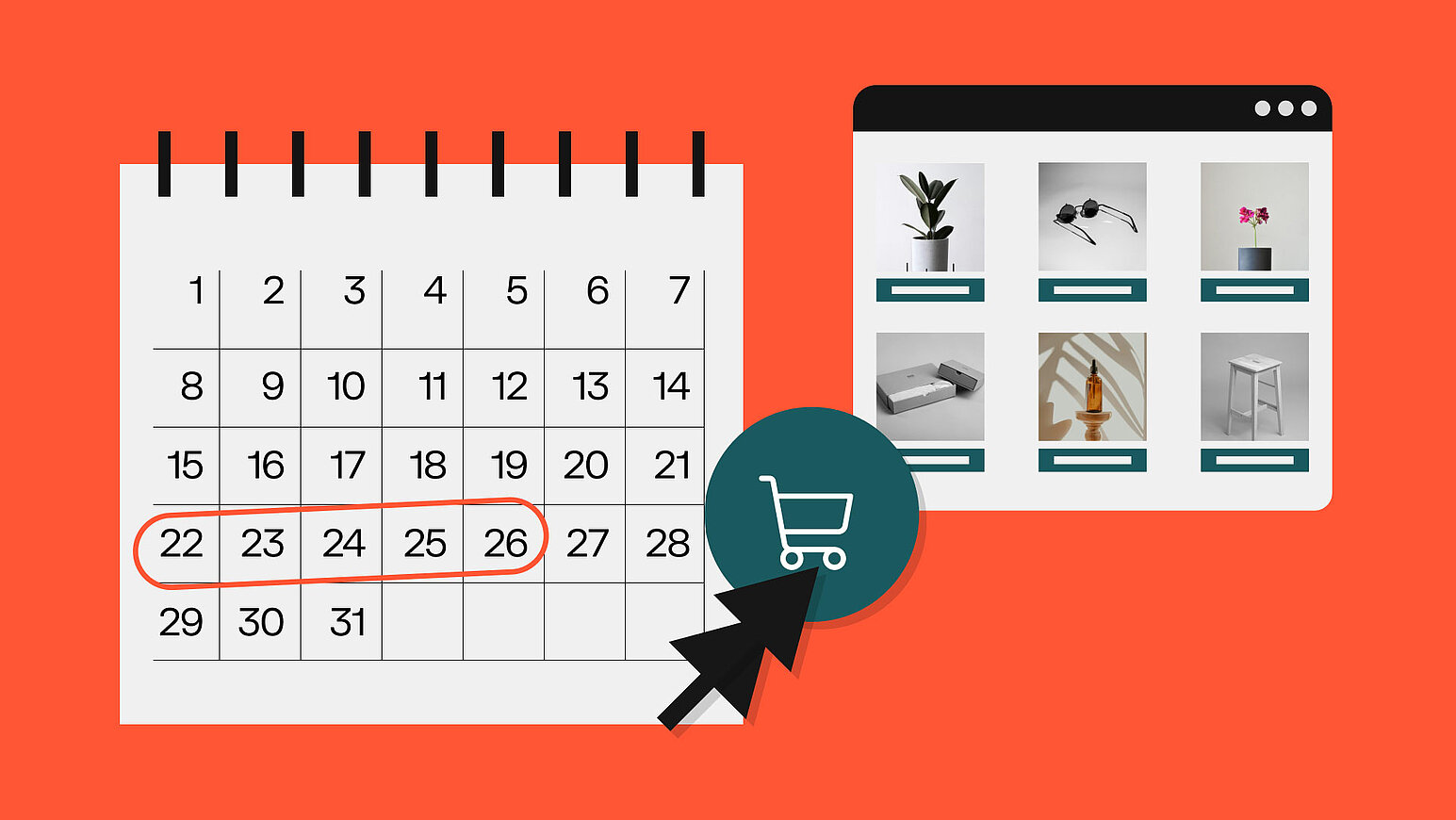
The Amazon Peak Season is the most important stretch of the year for online retailers, and 2026 is shaping up to be the biggest yet. It kicks off with major shopping events like Amazon's Black Friday Sale, rolls through Cyber Monday, and builds to the holiday shopping rush in December — the moments when sales, traffic, and competition all hit their ceiling at once.
In this guide, we cover every key date you need to know, back it up with the latest stats, and give you practical tips to get your logistics ready before the rush arrives.
When is Amazon Peak Season 2026?
This year's peak season is anchored by Black Friday (November 27, 2026) and Cyber Monday (November 30, 2026), along with Amazon's Black Friday Week, Cyber Week, and the intense pre-Christmas shopping period. But the calendar has expanded considerably in recent years, and there are now major sales events well before the traditional Q4 window even opens.
New for 2026: Prime Day is moving. According to a Bloomberg report from March 2026, Amazon is planning to shift Prime Day from its usual July slot to late June, marking the first time in the event's eleven-year history that the date has moved this significantly. Amazon has not officially confirmed the timing yet, but multiple insiders familiar with the plans have corroborated the story. Sellers should plan accordingly - earlier Prime Day means earlier stock, earlier campaigns, and earlier logistics prep.
Amazon also opened the year with the Big Spring Sale (March 25–31, 2026), offering deals across fashion, beauty, outdoor living, and garden essentials, open to all customers with no Prime membership required. Now in its third year, it signals clearly that Amazon's promotional calendar is no longer just a Q4 story.
And rounding out the year before the main holiday rush: Prime Big Deal Days, expected on October 7–8, 2026, act as a kind of second Prime Day and set the stage for the Cyber Week bonanza that follows.
What sets the Amazon Peak Season apart?
- High customer demand. During peak season, consumer demand spikes sharply across nearly every product category. Events like Black Friday, Cyber Monday, and Prime Day create concentrated windows of intense buying activity. As the world's largest e-commerce platform, Amazon and its sellers are positioned better than anyone to capitalize.
- Exclusive offers and discounts. Amazon drives urgency through time-limited deals, many of which are exclusive to Prime members. In 2026, Amazon's AI shopping assistant Rufus - now active across more than 300 million customer accounts - is increasingly influencing what shoppers discover and purchase during these events, making product visibility more competitive than ever.
- Massive opportunity for sellers. For brands and retailers on Amazon, peak season is the year's biggest revenue window. But it only rewards those who prepare. Stock levels, logistics bandwidth, and marketing timing all need to be locked in well in advance.
If you're selling on Amazon and want more flexibility when it comes to fulfillment, get in touch. We handle the entire logistics process for Amazon sellers - fair, transparent, and tailored to your operation.
All Important Dates of the Amazon Peak Season 2026
Here's your full overview of the key e-commerce dates in 2026, both on and beyond Amazon:
- Amazon Big Spring Sale — March 25–31, 2026
Deals across fashion, beauty, outdoor and garden essentials. Open to all customers, no Prime membership needed.
- Earth Day — April 22, 2026
Drives demand for sustainable and eco-friendly products.
- Mother's Day — May 10, 2026
High-performing day for cards, flowers, jewelry, and thoughtful gifts.
- Father's Day — June 21, 2026
Strong for tools, tech gadgets, apparel, and lifestyle gifts.
- Independence Day (US) — July 4, 2026
Prime time for patriotic items, grilling essentials, and summer gear.
- Amazon Prime Day — expected late June 2026
Amazon's biggest summer event, exclusive to Prime members. According to Bloomberg, moving from July to late June for the first time. Official announcement expected 3–4 weeks before the event.
- Back-to-School Season — late August / early September 2026
A crucial sales period for clothing, school supplies, backpacks, and electronics.
- Labor Day (US) — September 7, 2026
The last summer holiday - prompts deals on seasonal items as shoppers shift to fall.
- Amazon Prime Big Deal Days — expected October 7–8, 2026
A second Prime-exclusive event ahead of Cyber Week. Exact dates confirmed by Amazon shortly before launch.
- Halloween — October 31, 2026
The first significant sales peak of the season. Costumes, decorations, candy, and party supplies - nearly 40% of Halloween purchases now happen online.
- Singles' Day — November 11, 2026
The world's largest shopping event by volume, originating in China and growing globally every year.
- Amazon's Black Friday Week — expected November 20–27, 2026
Amazon's extended Black Friday campaign with daily deals building momentum into Cyber Monday.
- Thanksgiving (US) — November 26, 2026
The start of the "Turkey 5" - five key holiday shopping days including Black Friday and Cyber Monday. Amazon deals typically go live here too.
- Black Friday — November 27, 2026
One of the year's biggest shopping days, both online and in store. Learn more in our comprehensive Black Friday article.
- Amazon's Cyber Week — expected November 28 – December 7, 2026
Carries the Black Friday momentum through early December.
- Cyber Monday — November 30, 2026
Now the largest single online shopping day of the year. Massive in tech, fashion, and digital goods.
- St. Nicholas' Day — December 6, 2026
Especially relevant for sellers shipping into German-speaking markets - drives early holiday purchases.
- Green Monday — December 14, 2026
The second Monday of December, driven by urgency for guaranteed pre-Christmas delivery.
- Super Saturday — December 19, 2026
The last Saturday before Christmas - a key spike for in-store shopping and express fulfillment.
- Monday Before Christmas — December 21, 2026
Traditionally one of the biggest last-minute shopping days of the year.
- Christmas Eve — December 24, 2026
A rush of last-minute gift card purchases and digital orders.
- Boxing Day — December 26, 2026
A major post-Christmas sales day popular in the UK, Canada, and Australia - great for clearing excess holiday stock.
Statistics and Sales Figures: Amazon Peak Season 2025
Amazon Prime Day 2025 (July 8–11 — the first-ever four-day Prime Day)
- US e-commerce sales: $24.1 billion across the four days — up 30.3% year-over-year, and roughly the equivalent of two Black Fridays combined (Adobe Analytics)
- Independent sellers saw their biggest single day in Amazon history, with a record revenue uplift of nearly 300% globally
- Mobile shopping drove more than half of all Prime Day purchases — over $12.5 billion via smartphones
- AI-driven shopping traffic surged 3,200% year-over-year as consumers increasingly used AI tools to find and compare deals
Black Friday and Cyber Week 2025
- Cyber Week 2025 globally generated an unprecedented $44.2 billion in online sales — up 7.7% year-over-year
- Cyber Monday 2025 became the largest single online shopping day in US history at $14.25 billion — up 7.1% YoY (Adobe Analytics)
- Black Friday 2025 online sales reached $11.8 billion in the US — up 9.1% YoY
- AI influenced $9.3 billion in global online Cyber Week sales — a clear turning point for AI-assisted commerce
- A record 202.9 million consumers shopped across the five-day Thanksgiving weekend, surpassing the previous record set in 2023
- Shoppers spent an average of $337.86 over the weekend — the highest figure since 2019
- Online holiday sales from Black Friday through Cyber Monday reached $75.5 billion in the US
Amazon overall in 2025
- Amazon's global revenue reached $716.9 billion in 2025 — up 12% year-over-year
- Amazon's North America segment grew 10% to $426.3 billion
- Amazon's AI shopping assistant Rufus generated approximately $12 billion in additional annual revenue in 2025, now used by over 300 million customers
- Amazon fulfilled over 9 billion items with same-day or next-day delivery globally in 2024
Top product categories during the 2025 peak season
- Electronics & Tech
- Beauty & Personal Care
- Toys & Games
- Home & Kitchen
- Apparel & Fashion


What Is the Origin of the Biggest Peak Season Days?
Most of today's major shopping events have their roots in traditional holidays, with Christmas remaining the year's dominant gift-giving occasion. Over time, occasions like Valentine's Day, Mother's Day, and Father's Day have also grown into significant sales drivers, shaped by decades of industry promotion and shifting consumer habits.
The clearest example is Black Friday. What started as a post-Thanksgiving shopping day in the US has become one of the largest global retail events, as relevant to sellers in Europe and Asia as it is to those in America.
Amazon Big Spring Sale — March 25–31, 2026
Now in its third consecutive year, the Big Spring Sale is firmly part of Amazon's annual calendar. It ran for a full week across fashion, beauty, home and garden, with daily themed deal drops and doorbuster offers. Unlike Prime Day, it's open to all shoppers, making it a valuable opportunity to reach beyond the Prime member base early in Q2.
Amazon Prime Day — expected late June 2026
Amazon's biggest summer event and one of the highest-grossing shopping days of the year - exclusive to Prime members. 2026 brings a significant change: Bloomberg reports that Amazon is planning to move Prime Day to late June for the first time, pulling billions in sales forward from Q3 into Q2. For sellers, earlier Prime Day means earlier preparation across the board. Amazon will announce the official date around 3–4 weeks before the event.
Back-to-School Season — August / September 2026
As the new school year kicks off, parents and students spend heavily on clothing, school supplies, backpacks, and electronics. This is one of the most consistent seasonal sales spikes of the year for e-commerce, especially in tech and apparel. An earlier Prime Day may also push some back-to-school purchasing into the summer months.
Amazon Prime Big Deal Days — expected October 7–8, 2026
Seen as a second Prime Day, this two-day October event is exclusive to Prime members and acts as the ideal momentum builder before the Black Friday rush. It gives sellers a second major window to boost visibility and move inventory before the peak holiday competition intensifies. Amazon confirms exact dates only shortly before the event.
Halloween — October 31, 2026
Halloween is no longer just a costume and candy holiday. It has become a full-scale retail event, with demand building across party supplies, décor, and seasonal products throughout October. Nearly 40% of all Halloween purchases now happen online.
Singles' Day — November 11, 2026
Originally from China, Singles' Day has grown into the world's largest shopping event by sales volume, encouraging shoppers to treat themselves. US retailers are increasingly participating, and many now stretch the event across a full Singles' Week of promotions.
Black Friday — November 27, 2026
One of the most important days in all of retail. Black Friday has evolved from a single in-store event into a multi-week campaign, with many sellers launching deals as early as the first week of November. Amazon's Black Friday Week typically starts around November 20, with daily deals building through to Cyber Monday. What started as a one-day event now runs, for many brands, across a full month.
Find out everything about Black Friday and Cyber Monday in our detailed article.
Cyber Monday — November 30, 2026
Traditionally the Monday after Thanksgiving and Black Friday, Cyber Monday has grown into the single largest online shopping day of the year. In 2025 it generated $14.25 billion in US online sales alone. Most sellers now blend it with Black Friday into extended Cyber Week campaigns with rotating daily offers.
Our tip: these events are no longer contained to a single day. Shoppers expect early access, extended deal windows, and personalized offers. Build your campaigns with flexibility and make sure your logistics can scale. In 2026, with Prime Day potentially arriving in June, preparation needs to start sooner than ever.
St. Nicholas' Day — December 6, 2026
Particularly relevant for sellers with cross-border operations into German-speaking markets. This day marks the first notable spike in festive purchases across Germany, Austria, and Switzerland, and is when many European retailers launch their Christmas promotions.
Green Monday — December 14, 2026
The second Monday of December sees a major uplift in last-minute Christmas purchases. Originally coined by eBay, it's a great moment to run flash deals with guaranteed pre-Christmas delivery messaging.
Super Saturday — December 19, 2026
The final Saturday before Christmas - also known as Panic Saturday. A huge moment for last-minute shoppers, both in-store and online. Sellers lean heavily into express delivery offers and last-chance deal messaging to capture every remaining conversion.
Monday Before Christmas — December 21, 2026
One of the final peak days of the season. Shoppers who realize Christmas is days away make their last-minute purchases, and retailers respond with deep discounts and next-day delivery guarantees to capture every order that's still winnable.
Find out the best logistics tips specifically for your Christmas business.
Boxing Day — December 26, 2026
A major post-Christmas shopping day in the UK, Canada, and Australia. Customers use it for clearance deals, gift exchanges, and voucher redemptions. For sellers with cross-border reach, it's a solid opportunity to clear excess holiday stock and re-engage seasonal customers.

10 Tips for Seamless Logistics During the Amazon Peak Season
1. Analyse and Forecast Demand
Accurate demand planning is the foundation of a smooth peak season. Use your historical sales data to forecast expected order volumes across all key events. The critical 2026 consideration: if Prime Day moves to late June, your stock and logistics timeline needs to shift forward to match. Don't wait for Amazon's official announcement to start planning.
If you work with a fulfillment partner like Quivo, share your forecasts early — unexpected bottlenecks at peak time are almost always a planning problem, not a logistics one.
2. Optimize warehouse management:
Efficient warehouse management is essential to avoid bottlenecks and ensure seamless logistics operations. Make use of cutting-edge logistics software, such as our Connector, to effectively track inventory, streamline processes, manage orders, and access real-time stock information.
3. Mitigate supply chain bottlenecks:
Thoroughly assess your entire supply chain, identifying potential bottlenecks, and devise a plan to mitigate their impact. It is crucial to have contingency plans in place to address any potential failures, especially during the critical Peak Season period.
Additionally, keep in mind that shipping service providers often apply Peak Season surcharges during November and December. Hence, shipping packages during this period may incur slightly higher costs than usual.
4. Process automation:
Automation reduces errors and saves time exactly when both are in shortest supply. The right logistics platform lets you automate inventory updates, order processing, and shipping label generation, keeping your operation running at scale without proportionally scaling your team. In 2026, with AI-assisted shopping driving more traffic than ever, your back-end processes should be just as efficient as the front end your customers see.
5. Prepare Your Team:
Get your staff trained and ready before the rush hits. If you need seasonal workers, start the process early — finding, hiring, and onboarding takes longer than most sellers expect. With a potential June Prime Day, that timeline is tighter than in previous years.
6. Monitoring and real-time tracking:
Monitor your logistics operations in real-time to identify and address potential issues early on. Use technologies like GPS tracking to track the location of deliveries and inform customers about the status of their orders. This creates transparency and enables quick responses to delays or other problems.
7. Implement just-in-time (JIT) principles:
During the Peak Season, it may be beneficial to apply the Just-in-Time principle. Order goods from suppliers to arrive shortly before their actual need. This reduces inventory levels and minimizes the risk of excess stock or shortages.
8. Outsource Your Logistics
When demand surges during the Amazon Peak Season, the operational complexity of fulfillment scales with it. Consider outsourcing at least part of your logistics to a professional fulfillment provider like us, one that handles your orders automatically and can absorb volume spikes without disrupting your operation.
Find out whether outsourcing logistics makes financial sense for your business in this article.
9. Keep Optimizing Continuously
Peak season or not, ongoing process improvement is what separates high-performing sellers from the rest. Regularly review your key metrics and costs and look for efficiencies at every stage, from warehouse layout and packaging methods to picking speed, carrier selection, and return processing. Small gains compound quickly at peak-season volumes.
10. Stay Flexible and Prepared
The peak season rarely unfolds exactly as planned. Prepare as thoroughly as possible, then stay agile. Keep backup carrier options ready, have a contingency plan if stock runs out faster than expected, and maintain a solid reserve of packaging materials. In 2026, with a shifting Prime Day and a rapidly evolving AI shopping landscape, the sellers who adapt fastest will win.

FAQ — All about the Amazon Peak Season
When is Amazon Peak Season 2026?
Amazon's peak season ramps up in early November and runs through the end of December, built around the holiday shopping rush. Black Friday (November 27) and Cyber Monday (November 30) are the main revenue drivers, but the season now effectively starts in October with the Prime Big Deal Days and extends through Boxing Day on December 26. The window is broader than it's ever been.
When does peak season begin for Amazon?
Technically, peak season begins in late November with Black Friday and Cyber Monday. But in practice, sellers need to be fully prepared well before that. Amazon's Prime Big Deal Days in early October are now a significant volume event in their own right, and with Prime Day potentially moving to late June in 2026, the entire annual sales calendar has shifted earlier.
When does Amazon hit its sales peak?
Amazon's highest sales volumes typically occur during the late November to December holiday period. Black Friday, Cyber Monday, and the final weeks before Christmas drive the sharpest spikes. That said, Prime Day is now a genuine second peak - in 2025 it generated $24.1 billion in US e-commerce sales, roughly equal to two Black Fridays combined.
Does Amazon pay more during peak season?
Yes. Amazon regularly increases hourly wages and offers additional bonuses and incentives during peak season to ensure its workforce can handle the significantly higher order volumes. It's a direct acknowledgment of the extra demands placed on fulfillment staff during the busiest months of the year.
What is the Amazon Spring Sale?
The Amazon Big Spring Sale is a seasonal shopping event that takes place in late March, offering deals across spring-focused categories including fashion, beauty, outdoor furniture, gardening, and home essentials. It's open to all customers regardless of Prime membership, which makes it different from most of Amazon's major sales events.
The 2026 edition ran from March 25 to 31 and has now concluded. For sellers, it's a valuable early-year opportunity to clear winter inventory, launch new collections, and build momentum heading into Q2.
Additional Resources to Optimize Your E-Commerce Logistics
The peak season sales won't wait. Prepare yourself as best as possible and learn how you can improve in the future! Here are more helpful tips from our fulfilment experts on how to optimize both your logistics and online shop for success:
Best Practices for E-Commerce Retailers - Watch now!
Learn in our latest webinar by Georg and James how to optimize your business by automating logistics and marketing, especially during peak times like Cyber Week!
Sources
Last updated: April 2026
Title: Amazon plans to shift Prime Day to June — Bloomberg (12 March 2026)
URL: bloomberg.com · retail-news.de · t3n.de · techbook.de
Title: Amazon Big Spring Sale 2026 — Everything you need to know
URL: aboutamazon.com · cnbc.com · today.com
Title: Amazon Prime Day 2025 — Record-breaking media efficiency
URL: skai.io · aboutamazon.com
Title: Amazon Annual Report 2025 — Global revenue and segment results
URL: amazon.com · retail-news.de
Title: Black Friday & Cyber Week 2025 — Winners, losers and market transformation
URL: almcorp.com · retailnext.net · productsup.com
Title: Cyber Week 2025 — Record $44.2B in online sales
URL: ecdb.com · zetaglobal.com
Title: Black Friday 2025 — NRF consumer survey results
URL: licenseglobal.com · nrf.com
Title: Black Friday and Cyber Monday 2026 dates
Note: The date of Amazon Prime Day 2026 has not been officially confirmed by Amazon at the time of publication. This article will be updated as soon as official information becomes available.
Additional Sources 2024, 2025: AP News, Digital Commerce 360 and the Amazon Seller Central Blog
Pictures:
Quivo © 2026, Amazon, canva, Pixabay
Insights into the future of scalable e-commerce logistics
ARTICLES
ARTICLES
Insights into the future of scalable e-commerce logistics

Ready to scale up?
The full logistics operations.
Let’s work together.