

Fulfilment in Germany Explained: Guide, Market & Statistics
German e-commerce turns over around 80 billion euros a year and more than 70 million people shop online regularly. As the market grows, so do expectations: fast delivery, hassle-free returns and smooth processes are the standard today. Any retailer who wants to scale will need professional fulfilment in Germany.
In this guide we explain what fulfilment actually means, what the market looks like right now, what advantages Germany offers as a location and what you should look for when choosing a provider. If you are looking for a concrete service instead, you will find everything on our page about fulfilment in Germany, including locations, prices and our complete offer.
- What Fulfilment Actually Means
- The Typical Fulfilment Process in Germany
- The Location Advantages of Germany
- The Cross-Border Opportunities
- Market Size and Relevance
- Figures & Market Development in the German Market
- Challenges for Retailers in Germany
- Understanding Fulfilment Costs in Germany
- Legal Framework: VerpackG, EPR and More
- Tips for Choosing the Right Fulfilment Provider
- Frequently Asked Questions About Fulfilment in Germany
What Does Fulfilment Mean in E-Commerce?
Fulfilment covers every step that comes up after an order is placed in your online shop. The term itself means nothing more than the fulfilling of the logistics, or the completion of an order. A professional fulfilment provider like Quivo in Germany takes these tasks off your hands and makes sure your customers receive their orders quickly and reliably.
That usually includes:
- Storage of products
- Picking (putting an order together)
- Packing the order
- Handover to the carrier
- Handling of returns
It also includes:
- Connecting the shop system and the warehouse system ("integration")
- Inventory management (what is in stock, what is missing?)
- Tracking and status updates
- Customer service around the processes, stock, delivery and returns
Important Distinctions:
- Carriers: shipping companies such as DHL or FedEx handle only the transport of parcels. A fulfilment provider, by contrast, takes over the complete process from storage through to dispatch and hands your parcels straight to those carriers for delivery.
- Self-shipping: here you take care of everything yourself. You store your products, pack the parcels and take them to the carrier. That works reasonably well for small shops, but it costs a lot of time and ties up resources as soon as your business grows.
- Dropshipping: with dropshipping, which is now fairly widespread, products are shipped directly by the manufacturer or wholesaler. You hold no stock, but you also have no control over quality, delivery times and service. Fulfilment gives that control back to you, because your goods sit in the provider's warehouse and can be shipped flexibly and fast with your branding and your quality standards.
The Typical Fulfilment Process in Germany
The fulfilment process covers every step needed to handle an online order efficiently. Here we explain the individual stages in detail:

Connect the Shop System

Store the Products

Individual Picking
Every order is assembled and packed automatically according to your specifications and what has been agreed.
In e-commerce fulfilment this is called "pick and pack".

Ship the Parcels

Manage Returns
Fulfilment service also includes handling your returns, along with classification and extras such as photo documentation.
The Location Advantages of Fulfilment in Germany
Germany is one of the most important e-commerce markets in the world and a central location with enormous potential for retailers. With over 80 billion euros in online retail revenue alone, Germany is one of the largest markets in Europe and sits in the global top 10. For you as a retailer that means a huge customer base and high demand for professional logistics.
A fulfilment provider in Germany gives you several concrete advantages that you will find only there:
Size of the Domestic Market:
- More than 80 million inhabitants
- Very high purchasing power by European comparison
- Over 70 million active online shoppers
- Average e-commerce basket size above the EU average
Infrastructure:
- A dense motorway network of more than 13,000 kilometres
- More than 20 international airports, including Frankfurt as the largest cargo airport in Europe
- Major sea ports such as Hamburg and Bremerhaven as gateways to global trade
- Efficient rail and combined transport for flexible logistics solutions
Central Position in Europe:
Germany borders nine countries, which makes it a logistics hub. From here, large and financially strong markets such as France, Austria, Switzerland, Poland and the Netherlands can be reached quickly and efficiently. A fulfilment location in Germany therefore gives you the ideal base for cross-border shipping across the whole of Europe and beyond. Airports like Frankfurt and Leipzig are among the biggest freight centres in the world. For you that means shorter transit times, better shipping terms and reliable access to global trade.
Availability of Providers:
Germany is home to many international fulfilment providers as well as specialised start-ups. That variety lets you pick exactly the partner that fits your requirements. At the same time, competition between fulfilment providers keeps the services on offer modern and the prices fair.
Customer Expectations:
German customers have high standards when it comes to online retail. Fast delivery, precise tracking and easy returns have long been the norm here. Many consumers expect next day delivery, and not only since Amazon. Fulfilment providers in Germany are set up for all of these requirements and help you keep your customers reliably satisfied.
Cross-Border Opportunities
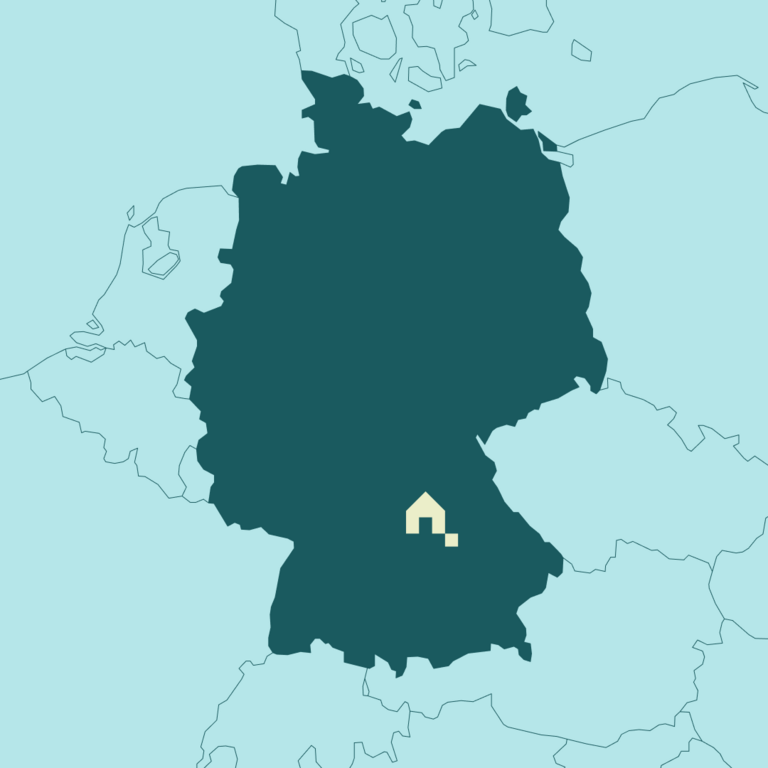
Germany is not only an attractive market in its own right, it is also the ideal springboard for international growth. Its central position in Europe makes the country a natural hub for cross-border shipping and gives you as an e-commerce retailer the best conditions for selling your products across Europe and beyond.
EU-Wide Shipping & Growth Potential:
As part of the European Union, Germany also gives you the advantage of simple customs handling within the EU single market. That reduces paperwork and speeds up shipping to countries such as France, Italy and Austria. Even for deliveries to non-EU countries such as Switzerland or the United Kingdom, fulfilment providers in Germany often have standardised processes that save you a great deal of effort.
Fulfilment in Germany therefore gives you the chance to widen your reach and test new markets without having to build your own structures. That way you can expand flexibly, serve customers across Europe and focus fully on your business.
- With cross-border fulfilment from Germany you build a base for sustainable growth and reach customers far beyond your own borders.
Market Size and Relevance of E-Commerce in Germany
German online retail is one of the largest markets in Europe. For e-commerce retailers that means broad reach and scalable opportunities, but also very demanding customer expectations:
- Gross revenue in German e-commerce came to around €80.6 billion in 2024, a slight rise of 1.1% compared with 2023.
- For 2025, industry forecasts expect further growth to €91 to 92 billion.
- Long-term projections see a market volume of around €140 billion by 2029.
- Online retail's share of total retail was roughly 10% in 2024 and is expected to rise to around 21% by 2029.
- In 2024, more than half of all online retail in Germany ran through marketplaces such as Amazon, eBay, Zalando and Otto. Their share was around 55%, equivalent to revenue of roughly €44 billion.
Figures & Statistics on Fulfilment Market Development
The e-commerce fulfilment market in Europe is growing considerably faster than the traditional logistics sector. With a market volume of around €26 billion (2024) and an annual growth rate of just under 15%, fulfilment is becoming the key segment in online retail.
While the wider 3PL market is bigger, fulfilment is the fastest growing part within that segment. For online retailers that offers enormous opportunities in a strongly scaling and future-proof market. Here are some current statistics:
- Worldwide, 60% of online retailers already use external e-commerce fulfilment providers at least in part, and around 20% of those rely on them completely.
- The global market for e-commerce fulfilment services reached a volume of around €112 billion in 2024 and is expected to sit at roughly €127 billion in 2025.
- Growth to more than €248 billion is forecast by 2030, at an annual growth rate of around 14%. In the longer term the market could even reach €426 billion by 2034.
- The European market for e-commerce fulfilment stood at €26.3 billion in 2024 and is growing at an annual rate of about 14.7%. A market volume of just under €60 billion is expected by 2030.
- Germany is one of the leading markets with a fulfilment volume of around €7.6 billion, and the trend is upward.
- The US market alone stood at around €20.4 billion in 2024 and could rise to just under €45 billion by 2030.
- The Asia-Pacific region currently holds the largest market share at over 27%, while North America is considered the fastest growing region. Consumer goods and electronics are driving the market particularly hard, with annual growth rates of 16%.
Note: these figures relate to e-commerce fulfilment services for online shops and e-commerce companies. They do not cover the entire 3PL market, which includes high-volume B2B fulfilment, freight forwarding and warehouse logistics, freight management and many other logistics services. Those figures are considerably larger and need to be looked at separately.
Challenges for Retailers in the German Market
German e-commerce offers enormous potential, but it also brings particular challenges. Anyone who wants to sell successfully here needs to know them and respond strategically:
- High return rates: Germany is one of the countries with the highest return rates in the world. Depending on the sector it sits between 20% and 50%, and in fashion even higher. For retailers that means considerable logistical and financial effort. Professional fulfilment in Germany of the kind we run can simplify this process substantially, with returns received, checked, reconditioned and restocked centrally.
- High customer expectations: customers in Germany are demanding and compare offers very closely. Fast delivery times, transparent tracking and hassle-free returns are the baseline. On marketplaces like Amazon and Zalando in particular, next day delivery has become the absolute standard. Shops that cannot keep up quickly lose competitiveness.
- Strong competition: alongside global players such as Amazon, Zalando and Otto, there are countless specialist shops active in the German market. All of them invest heavily in logistics and customer service. For you that means an efficient, scalable fulfilment solution is not a luxury but a necessity if you want to compete.
- High cost pressure: shipping costs, returns handling and warehousing add up quickly, especially when processes are not optimised. Working with a fulfilment provider can bring those costs down, because the provider benefits from economies of scale, better shipping terms and automated processes.
- Legal requirements: Germany has strict rules on data protection, precise packaging legislation and, of course, extensive consumer rights. Complying with all of it matters if you want to avoid legal risk. Experienced fulfilment providers know these requirements and make sure your logistics processes are compliant and secure.
What Does Fulfilment in Germany Cost?
There is no blanket answer, because the total price is made up of several components. For a realistic picture you should know the following three main cost blocks:
1. Storage costs: storage is usually billed by occupied volume or by pallet space. Typical benchmarks in the German market:
- Euro pallet: 6 to 9 euros per month
- Shelf space: from 0.30 euros per month
- Floor space: by cubic metre
2. Pick and pack: this is the handling fee per order. It covers picking, packaging and handover to the carrier. In the German market, pick and pack fees typically sit between €1.49 and €2.99 per order, depending on complexity, number of items per order and packaging effort.
3. Shipping costs: the actual carrier fees, for example for DHL, DPD, GLS, UPS or others. A standard parcel within Germany costs between €3.50 and €5.50 to ship, depending on weight, size and negotiated volume. Your individual product characteristics are of course decisive here.
Depending on the provider, add:
- Software or connector fees (for the interface to the shop system)
- Returns handling fees
- Extras such as custom packaging, inserts, bundles or labelling
- Customs handling for shipping outside the EU
Important: with reputable providers all items are listed transparently and easy to follow. Hidden fees or vague catch-all items are a warning sign. You will find a concrete overview of Quivo's terms on the pricing page or directly in the fulfilment Germany service page.
Legal Requirements: VerpackG, EPR and Data Protection
The German market is demanding in regulatory terms, and some legal requirements are mandatory for online retailers. Here are the three most important areas:
- Packaging Act (VerpackG): Since 2019, all online retailers shipping goods in Germany have had to license their packaging with a dual system (Grüner Punkt, Interzero, BellandVision and so on). That also applies to foreign retailers selling into Germany. Registration goes through the central packaging register office (LUCID). Breaches carry substantial fines. This obligation legally sits with the retailer, not with the fulfilment provider, though the fulfilment partner can take over the data documentation.
- Extended Producer Responsibility (EPR): EPR affects product categories such as electronics (WEEE), batteries, furniture and textiles. Manufacturers and importers are obliged to register and pay contributions that finance recycling and disposal. Here too, the duty sits with the retailer.
- Data protection and GDPR: In fulfilment, customer data is exchanged between shop, provider and carrier. A data processing agreement is mandatory and the provider has to work in a GDPR-compliant way. Look for relevant certifications or audits.
Sector-specific requirements: Depending on your range, additional rules apply:
- Supplements and food: hygiene regulations, best-before dates, batch traceability
- Cosmetics: cosmetics regulation, INCI declaration
- Electronics: WEEE, CE marking
- Toys: safety standards to EN 71
An experienced fulfilment partner knows these requirements and supports you operationally, but does not take on the legal responsibility. You will find more on Quivo's approach in the FAQs on our fulfilment Germany page.
Success Stories From E-Commerce Companies in Germany




Our Best Tips for Choosing Your Fulfilment Provider in Germany
Choosing the right fulfilment partner is one of the most important decisions for your e-commerce business. After all, you are trusting an external provider with a central part of your company. From our years of experience in the German fulfilment business, we find the following points especially important:
You will find an additional checklist in the FAQs on our fulfilment Germany service page.
- Location and network: make sure you check where the fulfilment provider has its warehouse locations and how well connected it is. Warehouses at major transport hubs such as the Berlin area, Hamburg or the Rhine-Main region make short delivery times and efficient distribution of your products possible. It is particularly valuable when the provider offers not only nationwide coverage in Germany but European locations as well. That makes cross-border shipping easier and helps you enormously in opening up new markets.
- Technical integration: a smooth connection between shop system and warehouse is the key. Your fulfilment partner should offer interfaces to the common platforms such as Shopify, WooCommerce, Shopware or Magento and use modern API solutions. That way orders are forwarded automatically, stock levels are updated in real time and shipments are tracked immediately. The better the systems mesh, the less manual work is left with you. And that can be a lot.
- Additional services: many providers now go far beyond storage and shipping, so check what extras you are offered. Those include personalised packaging, branding options, quality checks or special storage for sensitive products. A well-equipped fulfilment provider like Quivo can also help you with returns management, receiving, checking and restocking returned goods. Services like these do not only raise efficiency, they raise customer satisfaction too.
- Transparent cost structure: clarity on costs is another important point. Good providers put their prices in the open and help you understand exactly what you are paying for. Typical cost items are storage fees, pick and pack costs, shipping fees and extras. Hidden costs are something you should avoid at all costs. Check whether there are minimum quantities or setup fees, and whether the provider is flexible enough to keep pace with your growth.
- Own warehouses or sub-contractors? Check whether the provider runs its warehouses itself or works with partner warehouses. Self-run locations guarantee consistent quality, your provider's own processes and full control. Providers who outsource their operation to sub-contractors often have fluctuating quality standards. A good question to ask a potential provider: "Are your warehouses self-operated or partner sites?"
- Industry expertise: beauty, fashion, supplements, jewellery and electronics all place very different demands on storage, packaging and shipping. A provider that has already gathered experience in your sector avoids the typical pitfalls. Ask for reference customers in your industry or take a look at the industry pages the provider covers.
- Scalability and cross-border capability: your provider has to be able to grow with you. Ask the concrete questions: what happens when my volume rises from 500 to 5,000 orders per month? Can I expand across Europe without switching provider? If you are planning for the long term, an international network is a major advantage.
In Summary: Fulfilment in Germany Is a Must
The German e-commerce market is huge, demanding and often decided on logistics. Anyone who wants to hold their own here needs a professional partner that does not just store and ship but actively supports your growth. Automated processes, real-time data, fast delivery and reliable returns management are no longer extras, they are the foundations of success.
We are Quivo, your specialist e-commerce fulfilment provider with two warehouses of our own in Germany (Wetzlar in Hesse and Kösching in Bavaria) and six further self-run fulfilment centres worldwide. More than 1,450 brands, from start-ups to established names, rely on our logistics every day, with over 99.8 percent same day fulfilment and 98 percent next day delivery in Germany.
- To see what we actually do and what a setup with us could look like for your shop, head to our service page fulfilment Germany.
- Or request your no-obligation quote straight away.
FAQ: Frequently Asked Questions About Fulfilment in Germany
What Is the Difference Between Fulfilment and 3PL?
3PL (Third Party Logistics) is an umbrella term for outsourced logistics services of every kind, including:
- Freight forwarding
- Warehouse logistics
- Transport
- Fulfilment
Fulfilment is therefore a subset of 3PL and refers specifically to the handling of e-commerce orders: storage, picking, packing, shipping and returns for online shops.
The practical difference:
- A classic 3PL provider mostly serves B2B orders such as whole pallets to wholesalers
- A fulfilment provider specialises in B2C single items and multichannel distribution
Do I Need a Warehouse in Germany if I Sell From Austria or Switzerland?
For pure DACH shipping, a warehouse in Austria, in Kösching (Bavaria), in the Berlin area or at another site close to the border is often enough. We have large warehouses and fulfilment centres at these locations. Cross-border deliveries from abroad are technically no problem at all.
But as soon as your German volume becomes significant (roughly more than 500 orders per month), a German warehouse pays off financially through:
- Better shipping terms
- Shorter transit times
- Easier VerpackG and EPR handling
- Fewer cross-border surcharges
Rule of thumb: as the German share of your business grows, a German location usually pays for itself within three to six months.
What Happens if There Are Delivery Problems or a Loss?
Reputable fulfilment providers have standardised claims processes. Liability is clearly regulated:
- If the carrier loses a parcel: the carrier (DHL, DPD, GLS and so on) takes on liability in line with its terms and conditions.
- Within the warehouse: the fulfilment provider is liable for damage or loss caused by negligence, subject to the liability limits agreed in the contract.
- Higher losses: these can be covered through transport insurance.
Important: all of these details and conditions are best clarified before you sign, directly with your fulfilment partner and with any insurance company of your choice.
How Fast Can I Get a Fulfilment Setup Live in Germany?
Depending on the provider and the complexity of your range, onboarding typically takes two to four weeks.
Three steps matter here:
- Connecting the shop system through an interface (Connector or API)
- Taking over master data and shipping rules (SKUs, barcodes, packaging logic)
- Goods delivery into the warehouse
As soon as the stock is physically stored and available in the system, the first orders can go out.
Can I Serve Several Sales Channels at Once With One Fulfilment Provider?
Yes, and that is one of the strongest arguments for external fulfilment. Modern fulfilment software (such as the Connector) can collect orders from different channels simultaneously and serve them from one central stock pool:
- Shopify
- Amazon
- Otto
- TikTok Shop
- eBay
- Your own shop systems (WooCommerce, Shopware, Magento and so on)
This is called multichannel fulfilment and it has two central advantages:
- It prevents overselling through synchronised stock
- It reduces logistics costs, because you only need one warehouse instead of several
Is Fulfilment Worth It for Small Online Shops With Under 100 Orders per Month?
In our experience the threshold for outsourcing to make economic sense sits at 100 to 300 orders per month.
Below that, self-shipping often still adds up, especially when:
- The products are not very complex
- You can put your own time in as a sole trader
- Storage space is available at home or in the office
As soon as you are packing parcels daily, driving to the post office regularly and running short on storage space, the maths tips in favour of a fulfilment provider. At the latest during seasonal peaks such as Black Friday or Christmas, a professional partner becomes a necessity for many small shops.
Sources
Our service pages, among others:
- E-Commerce Fulfilment Services
- Fulfilment in Germany
- EU Fulfilment Services
- Fulfilment Partner
- Locations
Fulfilment centre in the UK: https://quivo.co/uk/what-is-a-fulfilment-centre-uk/
Logistics software, the Connector: https://quivo.co/uk/connector/
Statista: analyses of the e-commerce landscape in Germany
Globenewswire.com: E-Commerce Fulfillment Services Market, Global Forecast
Grandviewresearch.com: E-Commerce Fulfillment Services Market Size, Share & Trends Analysis Report (2024 to 2030)
Capitaloneshopping.com: E-Commerce Fulfillment Statistics: 2024 Industry Trends & Analysis
Image sources: Canva, pixabay, Quivo © 2026
Insights into the future of scalable e-commerce logistics
ARTICLES
ARTICLES
Insights into the future of scalable e-commerce logistics
Ready to scale up?
The full logistics operations.
Let’s work together.